How Lapsi Became Nepal's Most Beloved Snack and Pickle
From wild forest fruit to the nation's favorite titaura and achar — trace the fascinating journey of how hogplum conquered Nepali taste buds and became a cultural icon.
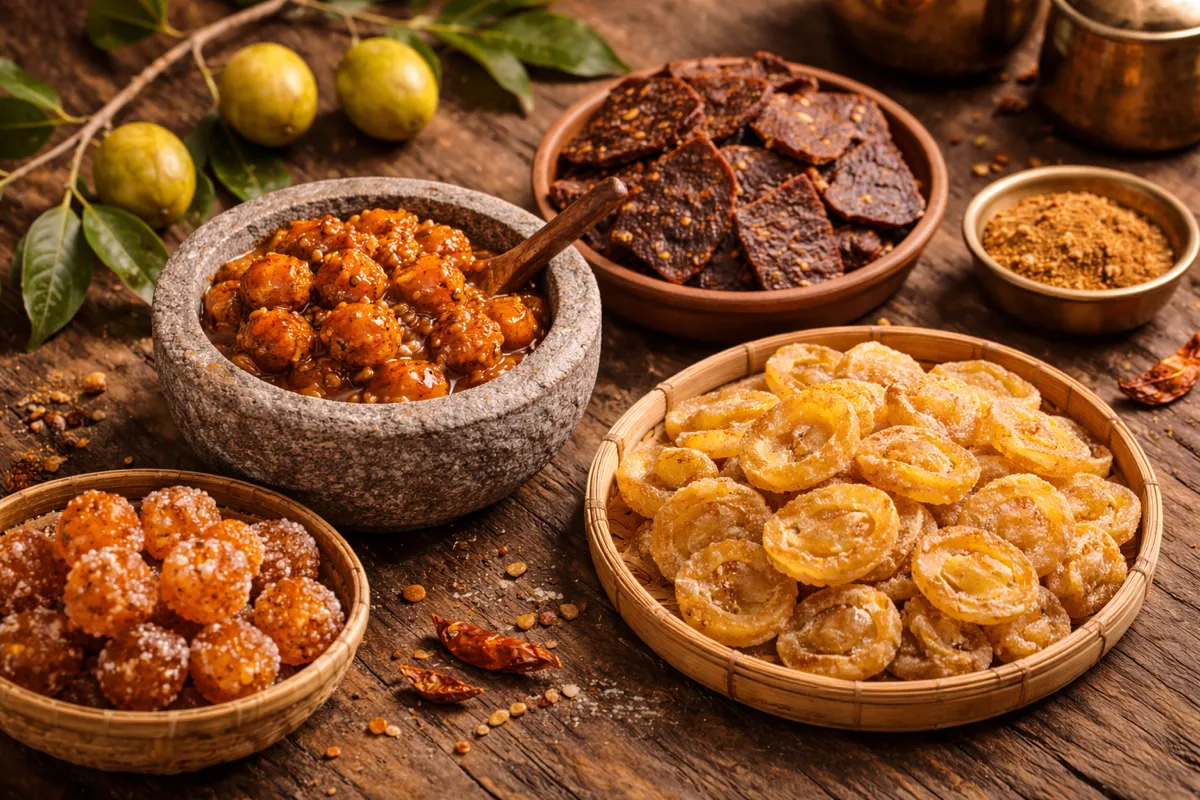
How Lapsi Became Nepal's Most Beloved Snack and Pickle
Walk into any Nepali grocery store — whether in Kathmandu, Queens, or Sydney — and you will find rows of lapsi products lining the shelves. Titaura, candy, achar, dried slices. But how did a wild forest fruit from the middle hills become the undisputed king of Nepali snacks and pickles? The answer stretches back centuries and weaves through trade routes, family kitchens, and the resourcefulness of a people who never let anything go to waste.
The Wild Beginnings
Lapsi (Choerospondias axillaris) is native to the subtropical and warm-temperate forests of the central Himalayas. Long before anyone thought of cultivating it, the fruit grew wild across the mid-hills of Nepal, from Ilam in the east to Palpa in the west. Archaeological and botanical evidence suggests that communities in the Kathmandu Valley and surrounding hills have been harvesting wild lapsi for at least 500 years.
The fruit's natural tartness and high acidity made it a practical choice in an era before refrigeration. Acidic foods resist bacterial growth, and early Nepali communities quickly learned that lapsi could be dried, salted, and stored for months without spoiling. This natural preservability was the first spark that turned a wild fruit into a household staple.
From Foraging to Farming
The shift from wild harvesting to deliberate cultivation likely began during the Malla period in the Kathmandu Valley. As the valley's population grew and trade flourished, demand for lapsi outpaced what wild trees could supply. Farmers in districts like Bhaktapur, Kavre, and Gorkha began planting lapsi trees along terrace edges and property boundaries — a practice that continues to this day.
By the 18th and 19th centuries, lapsi orchards were a recognized feature of the Nepali mid-hill landscape. The trees served double duty: their fruit fed families, and their tall canopies provided shade for livestock and smaller crops below. This integration into the farming system cemented lapsi as more than a foraged curiosity — it became an agricultural asset.
The Birth of Titaura
The transformation of raw lapsi into titaura is perhaps the most important chapter in the fruit's history. The exact origins are debated, but the technique likely evolved in the kitchens of Newar households in the Kathmandu Valley during the 18th or early 19th century.
The process was ingenious in its simplicity:
What made titaura revolutionary was not any single ingredient but the combination of sun-drying with Nepali spice traditions. The result was a shelf-stable snack that was intensely flavorful, lightweight, and easy to carry — perfect for a country where people regularly walked for days between villages.
Achar: The Pickle That Defined a Cuisine
If titaura was the snack, lapsi achar was the condiment that transformed everyday meals. Nepali achar culture is among the richest in South Asia, and lapsi sits at its heart.
The earliest lapsi pickles were simple preparations — mashed pulp with salt, chili, and perhaps mustard oil. But over generations, regional variations exploded:
Each family guarded its own recipe, passed down through mothers and grandmothers. To this day, asking a Nepali family for their lapsi achar recipe is to ask for a piece of their identity.
The Festival Connection
Lapsi's rise to cultural icon status was cemented by its deep connection to Nepali festivals. The fruit's harvest season aligns perfectly with Dashain and Tihar, Nepal's two greatest celebrations:
This festival association elevated lapsi from everyday food to something almost sacred — a fruit woven into the rituals of blessing, gratitude, and family togetherness.
The Cottage Industry Boom
The real commercialization of lapsi snacks began in the 1970s and 1980s. Small cottage industries in Bhaktapur, Kirtipur, and Dhading began producing titaura and lapsi candy for sale beyond their immediate neighborhoods. Several factors drove this boom:
By the 1990s, brands began emerging. Packaged titaura with printed labels replaced newspaper-wrapped bundles. The snack had officially entered the modern marketplace.
Lapsi Goes Global
The 2000s and 2010s saw a diaspora-driven expansion that no one had predicted. As Nepali communities grew in the United States, Australia, the United Kingdom, Japan, and the Gulf states, demand for lapsi products followed:
For the diaspora, lapsi was never just a snack. It was proof that home still existed, that the flavors of childhood could survive any distance.
The Artisanal Revival
Today, a new chapter is being written. The mass-produced titaura that dominated the 2000s is giving way to a renewed appreciation for quality, tradition, and craft. Brands like Champak Paun represent this shift:
Why This History Matters
Understanding how lapsi became Nepal's favorite snack and pickle is not just an exercise in food history. It reveals something profound about Nepali culture itself — a culture that takes what the land provides, transforms it with patience and skill, preserves it for the seasons ahead, and shares it with those they love.
Every piece of titaura carries this entire history. The wild forests, the terraced orchards, the grandmother's kitchen, the festival exchanges, the immigrant's suitcase, and now the carefully crafted package that arrives at your door.
At Champak Paun, we do not just make snacks. We continue a story that has been unfolding for centuries.
One fruit. One nation. Generations of flavor.