The Story of Lapsi: Nepal's Hidden Superfruit
Discover the fascinating history and cultural significance of lapsi, the tangy Himalayan hogplum that has been a beloved part of Nepali cuisine for centuries.
The Story of Lapsi: Nepal's Hidden Superfruit
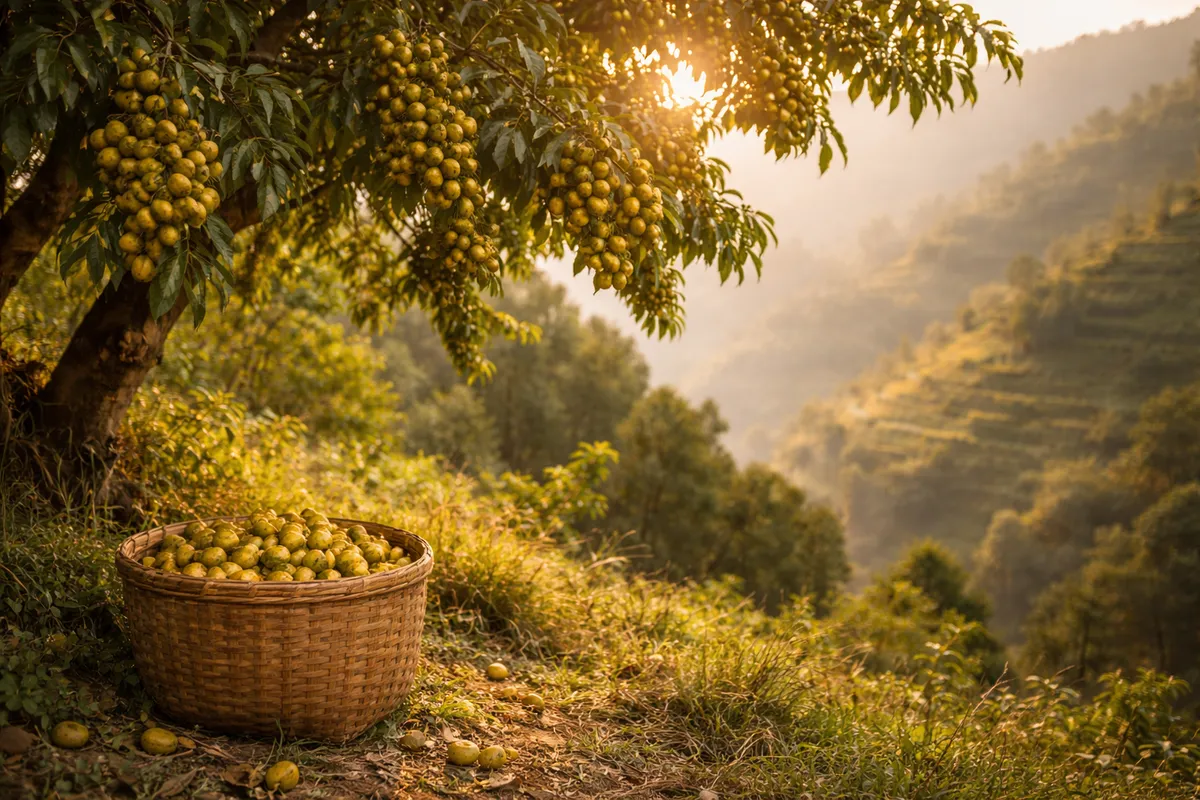
Tucked away in the hills and valleys of Nepal grows a remarkable fruit that most of the world has never heard of — lapsi (Choerospondias axillaris), commonly known as hogplum or Nepali hog plum.
A Fruit with Ancient Roots
Lapsi trees have been growing in the mid-hills of Nepal for centuries. The deciduous tree thrives at elevations between 900 and 2,100 meters, producing clusters of small, olive-sized fruits that ripen from green to golden yellow during the autumn months.
For generations, Nepali families have looked forward to the lapsi season, typically from September to December. The harvest marks not just a culinary event but a cultural tradition deeply woven into the fabric of Nepali life.
The Unique Flavor Profile
What makes lapsi truly special is its extraordinary flavor profile. The fruit delivers a complex taste experience:
This multi-layered taste makes lapsi incredibly versatile in Nepali cuisine.
Nutritional Powerhouse
Modern research has revealed what Nepali grandmothers always knew — lapsi is remarkably nutritious:
From Humble Fruit to Beloved Snack
The transformation of raw lapsi into the snacks we know today is an art form. Nepali families have perfected techniques for making:
Each preparation highlights different aspects of the fruit's versatile character.
Lapsi in Modern Times
As the Nepali diaspora has spread across the world, the craving for lapsi has traveled with them. For many Nepalis living abroad, a piece of lapsi candy isn't just a snack — it's a connection to home, to childhood, to family.
At Champak Paun, we're committed to bringing this incredible fruit to the world stage, sharing a taste of Nepal with everyone who's curious enough to try something new.
Stay tuned for more stories about Nepali food traditions and the journey of Champak Paun.